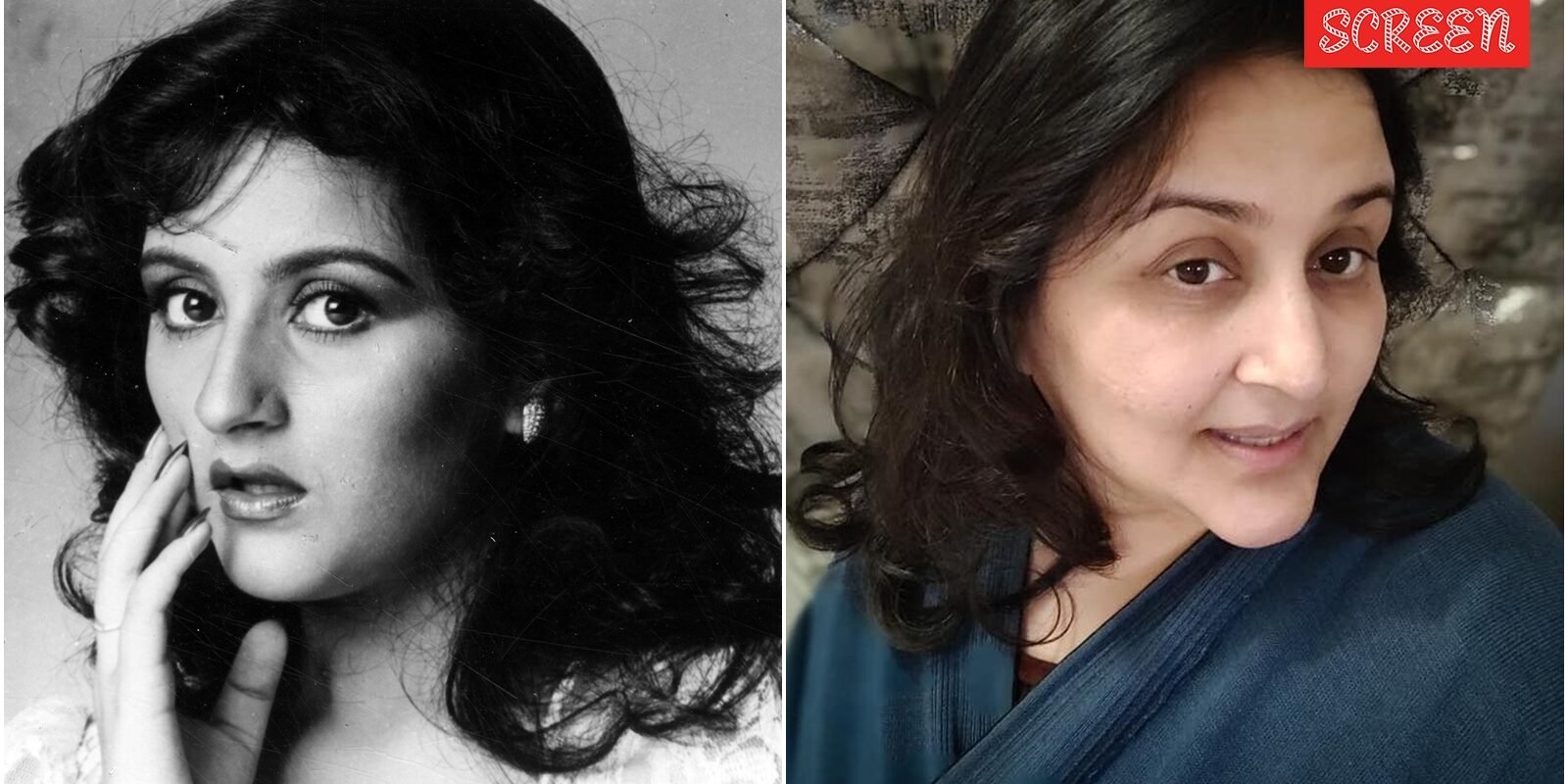
It is doubtful if any other Malayalam filmmakers have portrayed female beauty on screen as alluringly and enchantingly as Bharathan and Padmarajan. One of the biggest attractions of their portrayals was that they never went over the board while presenting the female actors. Instead, they allowed them to exist as themselves, unapologetically flaunting every shade of femininity within. Among the female actors, Suparna Anand uniquely had the opportunity to be portrayed on screen through the creative lenses of both filmmakers.
Although she appeared in only five Malayalam movies during her career, each remains etched in the minds of the audience for various reasons. Thanks to the way Bharathan depicted her in Vaisali (1988) and Padmarajan in Njan Gandharvan (1991), she remains the embodiment of ethereal beauty in the Malayali psyche, three decades after she bid adieu to the movies.
Must Read | ‘Could be your family tomorrow’: Vismaya Mohanlal, Tovino Thomas support CJP protests
Hailing from Mumbai, Suparna made her acting debut in Hindi as a child artiste and appeared in films such as Nagin Aur Suhagin (1979) and Chorni (1982). Her first role as an adult was in the Anil Kapoor-Madhuri Dixit starrer Tezaab (1988), according to Manorama Online.
It was while working on that film that she received the opportunity to play the titular role in Bharathan’s Vaisali, penned by Jnanpith awardee MT Vasudevan Nair. Adapted from a chapter of the Mahabharata, the movie revolves around Vaisali, a spellbindingly beautiful devadasi girl, who is brought in to seduce Rishyasringa, a young hermit, to get him to perform a yajna to bring rain to the kingdom of Anga.
The role of Rishyasringa was played by Sanjay Mitra, also a non-Malayali. Vaisali became a sensation across India, catapulting both Suparna and Sanjay to great heights. The movie not only brought them immense fame but also brought Suparna and Sanjay together. Unlike the film’s tragic ending, Vaisali and Rishyasringa ended up together in real life and tied the knot eventually. However, their marriage lasted only a decade, and they parted ways after becoming parents to two children.
Suparna’s movie career was also short, just like her marriage to Sanjay. Even though she appeared in notable Malayalam films such as Witness (1988), Mammootty’s Utharam (1989), Nagarangalil Chennu Raparkam (1990) and Njan Gandharvan (1991), giving impressive performances, she couldn’t soar beyond a certain point. This may have also been because none of her films turned out to be big hits.
ICYMI | Mohanlal’s heroine, Kamal Haasan’s on-screen sister, Sreeja quit cinema to marry a fan
Meanwhile, she also appeared in the Kannada movie Daada (1988), the Tamil film Dravidan (1989), the Telugu movie Ashoka Chakravarthy (1989), the Bengali film Ananda Niketan (1991), and Hindi movies such as Muqaddar Ka Badshaah (1990) and Dil Ne Ikaar Kiya (1992). Unfortunately, she didn’t find as much acclaim elsewhere as she did in Malayalam.
Thus, in 1997, she bid adieu to Tinseltown, with her final movie being director Basu Bhattacharya’s Aastha: In the Prison of Spring, starring Rekha and Om Puri in the lead roles. Subsequently, Suparna turned her focus to her familial life with Sanjay Mitra. Following their divorce, both Suparna and Sanjay married other people.
Don’t Miss | Jana Nayagan director recalls mood on set after Prakash Raj criticised Vijay: ‘I was worried’
Even after their separation, Suparna and Sanjay remained close friends, and a few years ago, they appeared together in a Malayalam television programme. “We have never fought or held grudges. No problems significant enough for that have ever happened in our lives. We still have mutual love. Don’t we always wish and pray for the happiness of those we love, no matter how far away they are? That is exactly what happens in our case,” she revealed.
Years later, Suparna revealed that she decided to step away from the limelight due to some bitter experiences she faced in the industry. “Casting couch has been there since time immemorial. It is irrelevant to question why people decide to respond after a period of 34 years. I worked in the Malayalam film industry for only four years. But I had to leave because of the pressures within the film industry,” Onmanorama quoted the actor as saying in 2024 in the aftermath of the release of the Justice Hema Committee report.


Join the conversation! You must be logged in to post a comment.
Login to Comment Register Free